Why the Placenta Matters More Than We’ve Been Told
After birth, the placenta is often treated as an afterthought — something quietly discarded once its job is “done.” But emerging research is telling a very different story: the placenta holds powerful information about pregnancy, birth, and long-term health for both parent and baby.
In fact, physician-scientists are now calling for placental evaluation to become a routine part of obstetric and neonatal care, not just something reserved for emergencies.
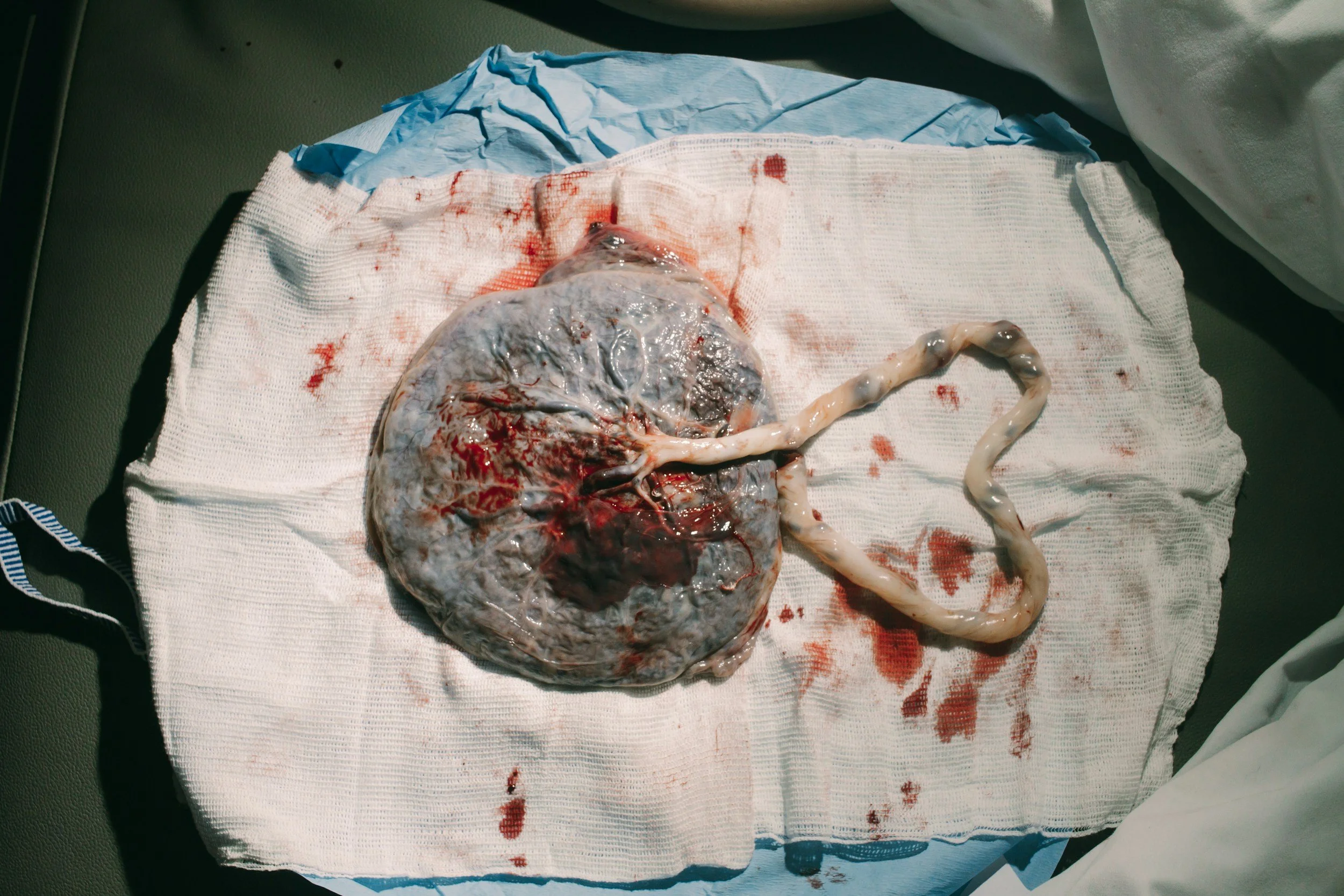
The Placenta: A Record of Pregnancy
The placenta is the lifeline between parent and baby. It manages the exchange of oxygen, nutrients, hormones, and waste throughout pregnancy. Because of this, it reflects how pregnancy unfolded — sometimes revealing information that isn’t obvious during labor or birth.
Placental pathology can help explain:
• Pregnancy complications like preeclampsia, fetal growth restriction, and preterm birth
• Certain causes of stillbirth
• Why an otherwise “normal” pregnancy may have felt physically or emotionally difficult
Researchers describe the placenta as a biological record — one that can help make sense of what happened, especially when outcomes feel unexpected or confusing.
What Placental Findings Can Tell Us — Beyond Birth
What’s especially important is that placental findings don’t just explain the past — they can also inform the future.
Certain placental patterns have been linked to:
• Increased risk of preeclampsia or complications in future pregnancies
• Cardiovascular health risks later in life for the birthing parent
• Neurological or growth concerns in infants
• Recurrence risk after stillbirth or pregnancy loss
For example, a placental finding called decidual arteriopathy is now being studied as a potential early marker for future cardiovascular disease in women. This shifts placental pathology from being “just about birth” to being part of lifelong health awareness.
Immediate Benefits for Newborn Care
Placental examination can also directly impact newborn care — especially for preterm babies. In some cases, placental review can identify fungal or infectious processes faster than blood cultures, allowing NICU teams to adjust treatment sooner.
This kind of information can change clinical decisions in real time, not days later.
Questions to Ask Your Provider About Placental Evaluation
If you’re curious about placental pathology or wondering whether it may be helpful for you or your baby, these questions can guide a thoughtful conversation with your care provider:
Before or During Pregnancy
• In what situations do you recommend placental examination?
• Are placentas ever evaluated after uncomplicated pregnancies?
• If complications arise, will the placenta automatically be sent to pathology?
During Labor or at Delivery
• If something unexpected happens during labor or birth, can the placenta be examined?
• Do I need to request placental pathology ahead of time, or is it decided after birth?
• Is there anything in my pregnancy history that would make placental evaluation especially useful?
After Birth
• Was my placenta examined? If so, what were the findings?
• If abnormalities are found, how might that impact my postpartum care or future pregnancies?
• Could placental findings provide insight into my baby’s health or development?
Looking Ahead
• Do any placental findings suggest risks I should monitor long-term (such as blood pressure or cardiovascular health)?
• Would you recommend sharing placental pathology results with my primary care provider?
• How might this information guide care if I become pregnant again?
If Pathology Is Not Routinely Offered
• Can I request placental pathology, and is there an added cost?
• How are results communicated, and who helps interpret them?
⸻
A Gentle Reminder
Asking questions doesn’t mean something is wrong — it means you’re engaged in your care. Placental evaluation is one tool among many that can help families better understand their pregnancy, birth, and health moving forward.
At Nurture, we believe informed parents are empowered parents — and you deserve access to information that supports your whole story. Pregnancy doesn’t end at delivery — and neither does its impact. Understanding the placenta helps bridge the gap between obstetric care, postpartum recovery, and long-term health.
The placenta is not waste tissue. It’s a storyteller. And listening to it may help us care more fully for parents and babies — now and in the years ahead.
🌺 Erica xo
This article is intended for educational purposes and is not a substitute for individualized medical advice. Families are encouraged to discuss placental evaluation with their healthcare provider.
References
Roberts, D., Aisagbonhi, O., & Parast, M. M. (2024). Incorporating placental pathology into clinical care and research. Trends in Molecular Medicine.
https://www.cell.com/trends/molecular-medicine/abstract/S1471-4914(24)00216-8
ScienceDaily. (2024, September 18). Placental pathology is underused but could improve care for mothers and babies.
https://www.sciencedaily.com/releases/2024/09/240918125027.htm
Amsterdam Placental Workshop Group. (2014). Consensus statement on placental sampling and diagnostic criteria for placental lesions.
Established standardized definitions and diagnostic frameworks still used internationally in placental pathology.