Our Hypnobirthing Philosophy

Honest. Evidence-Based. Woman-Centered.
There is no single “right” way to give birth. There is no one childbirth class that works for every family. And there is certainly no one technique that guarantees a particular birth outcome.
We believe childbirth education should empower—not pressure—expecting parents. That means providing honest information, practical skills, and evidence-based tools that support you no matter how your birth unfolds.

What Is Medical-Grade Self-Hypnosis?
Clinical hypnosis has been used in healthcare for decades to help people manage pain, anxiety, stress, and medical procedures.
During pregnancy and birth, hypnosis can help many women:
reduce fear and anxiety
remain calm during contractions
improve confidence
stay connected to their bodies
navigate unexpected changes
create a greater sense of control
Self-hypnosis is not about “going unconscious.” It isn’t about losing control. It isn’t about someone else controlling your mind.
Instead, it is a conscious state of focused awareness that allows you to intentionally influence how you experience birth. Research continues to support hypnosis as an effective tool for reducing fear, improving coping, and increasing birth satisfaction.

A Tool—Not a Requirement
One misconception we often see is the idea that hypnobirthing is the reason someone has a powerful, calm and peaceful birth. We don’t believe that’s true.
Women have been giving birth with power, strength, and embodied calm across cultures for thousands of years. Birth is a normal physiologic process.
Calm birth does not belong to one particular method. Hypnobirthing simply gives many families another way to access the confidence and calm that already exists within them. Some people will use it extensively. Others will use it only occasionally. Some won’t use it at all. Every birth is different.

Birth Has Become Highly Medicalized
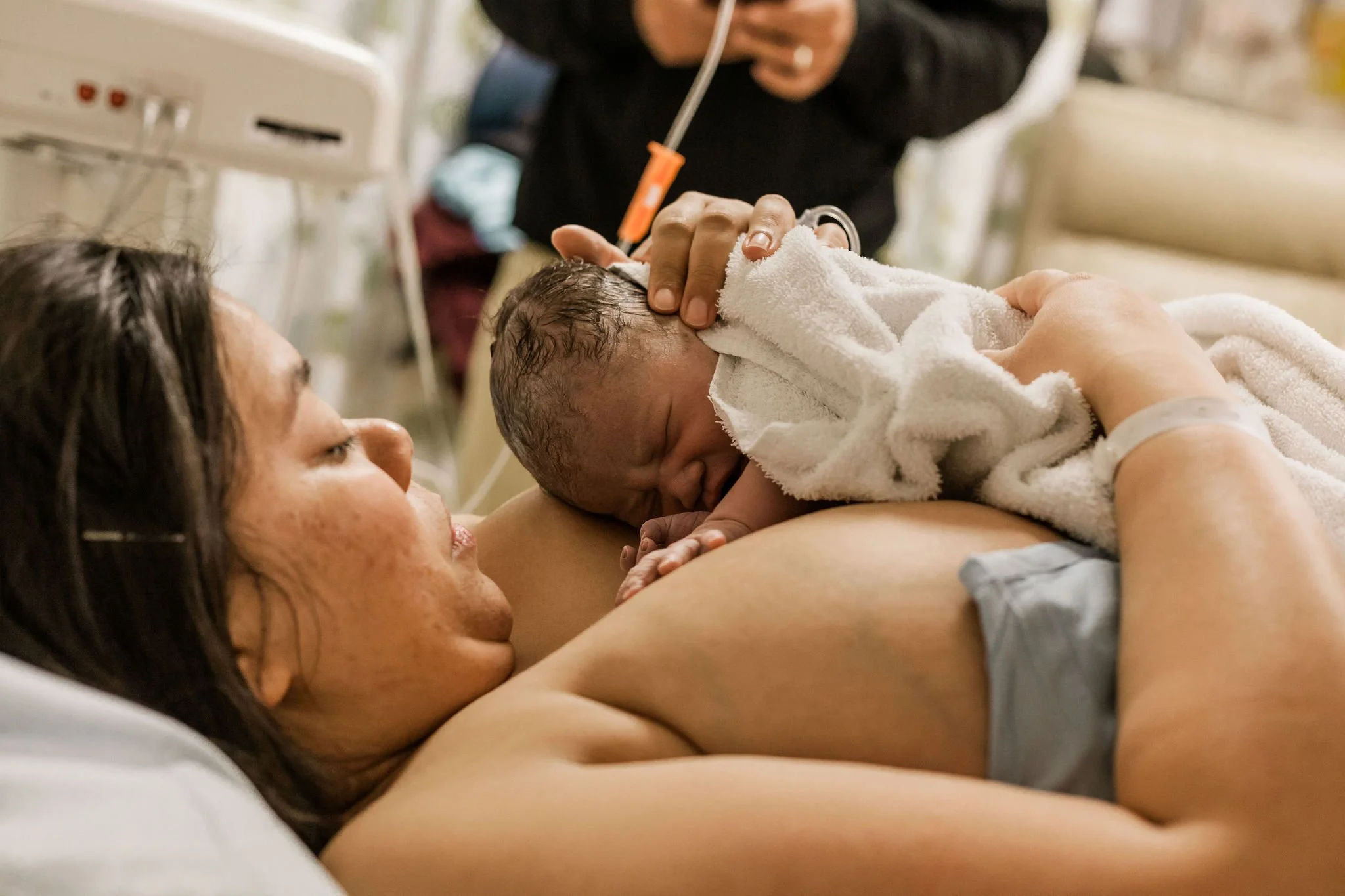
Modern birth exists within a very different culture than it did generations ago.
Many families grow up hearing frightening birth stories, watching dramatic television portrayals, or knowing someone who experienced birth trauma.For many parents, pregnancy may be the first time they’ve ever witnessed birth.
This matters. Fear doesn’t come from weakness. It often comes from living in a culture where normal physiologic birth has become unfamiliar. Our goal is to help you approach birth feeling informed, supported, and confident—whatever path your birth takes.
Rethinking Pain in Birth
One of the biggest differences in our classes is how we talk about labor.
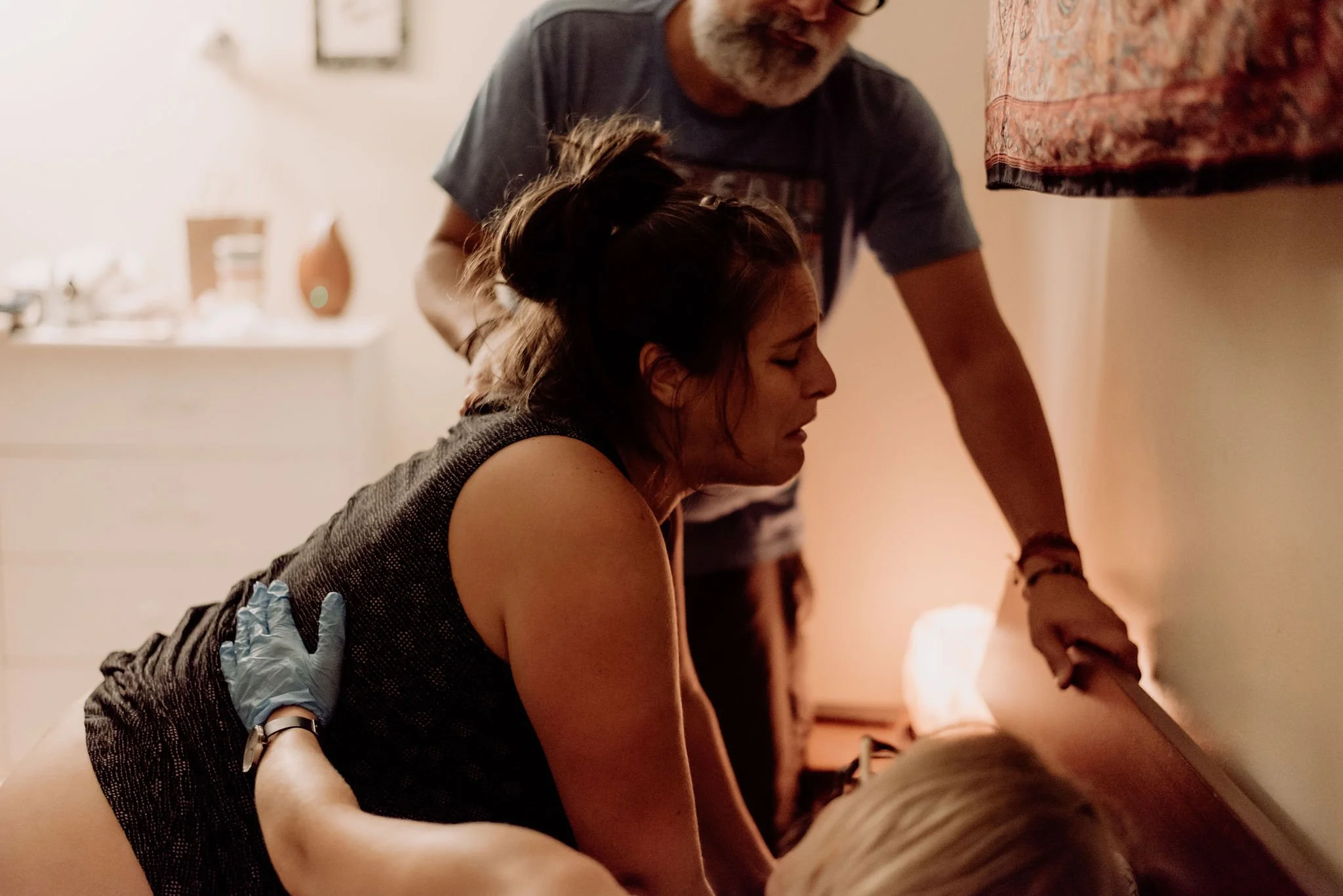
Most childbirth education begins with the assumption that labor is painful and then teaches you how to cope with that pain.We take a different approach. We prepare for a comfortable, physiologic birth.
We teach that normal labor contractions are designed to be powerful, purposeful, and productive. They are the work your uterus performs to bring your baby into the world. While they are often intense and physically demanding, many women experience them as something very different from the pain they may have experienced at other times in life or from the pain they have been conditioned to expect.
How we understand birth influences how we experience it.
Labor contractions are not a manifestation of brokenness or dysfunction in your body. So unlike a time where your body may have been hurt or broken, going into labor and giving birth is a healthy, normal, powerful function of life. When we replace fear with understanding, and tension with relaxation, we create the conditions for the body to work more efficiently. For many families, this dramatically changes the experience of labor.
A common misconception is that hypnobirthing teaches you to enter a deep trance where you’re unaware of what’s happening around you. That isn’t how we teach our classes. Our goal is never to teach you to disconnect you from your body or your birth. We teach conscious, medical-grade self-hypnosis—a way of using focused attention while remaining fully aware, engaged, and responsive.
You’ll use self-hypnosis sitting on a birth ball.
Standing.
Walking.
Changing positions.
Talking with your birth team.
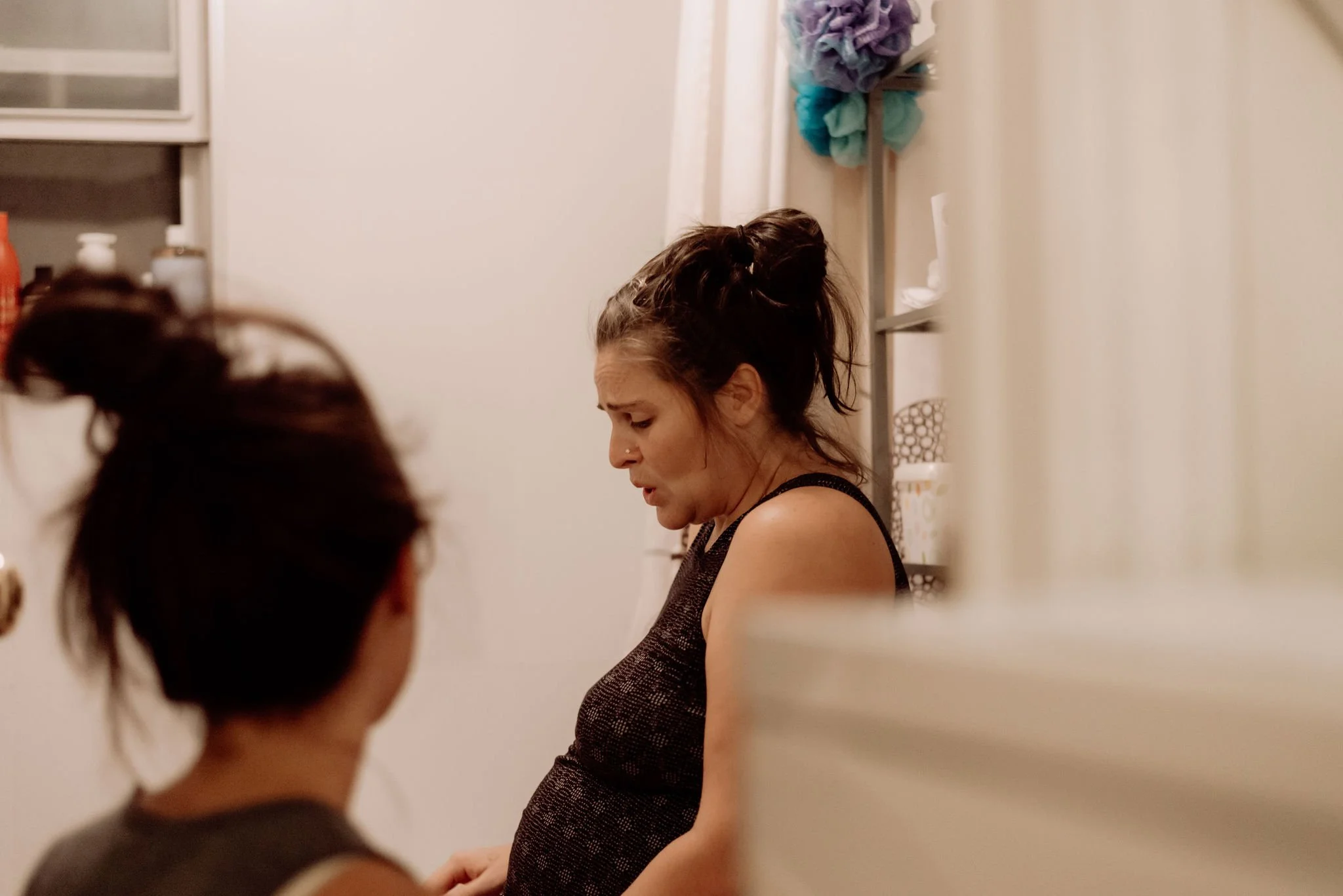
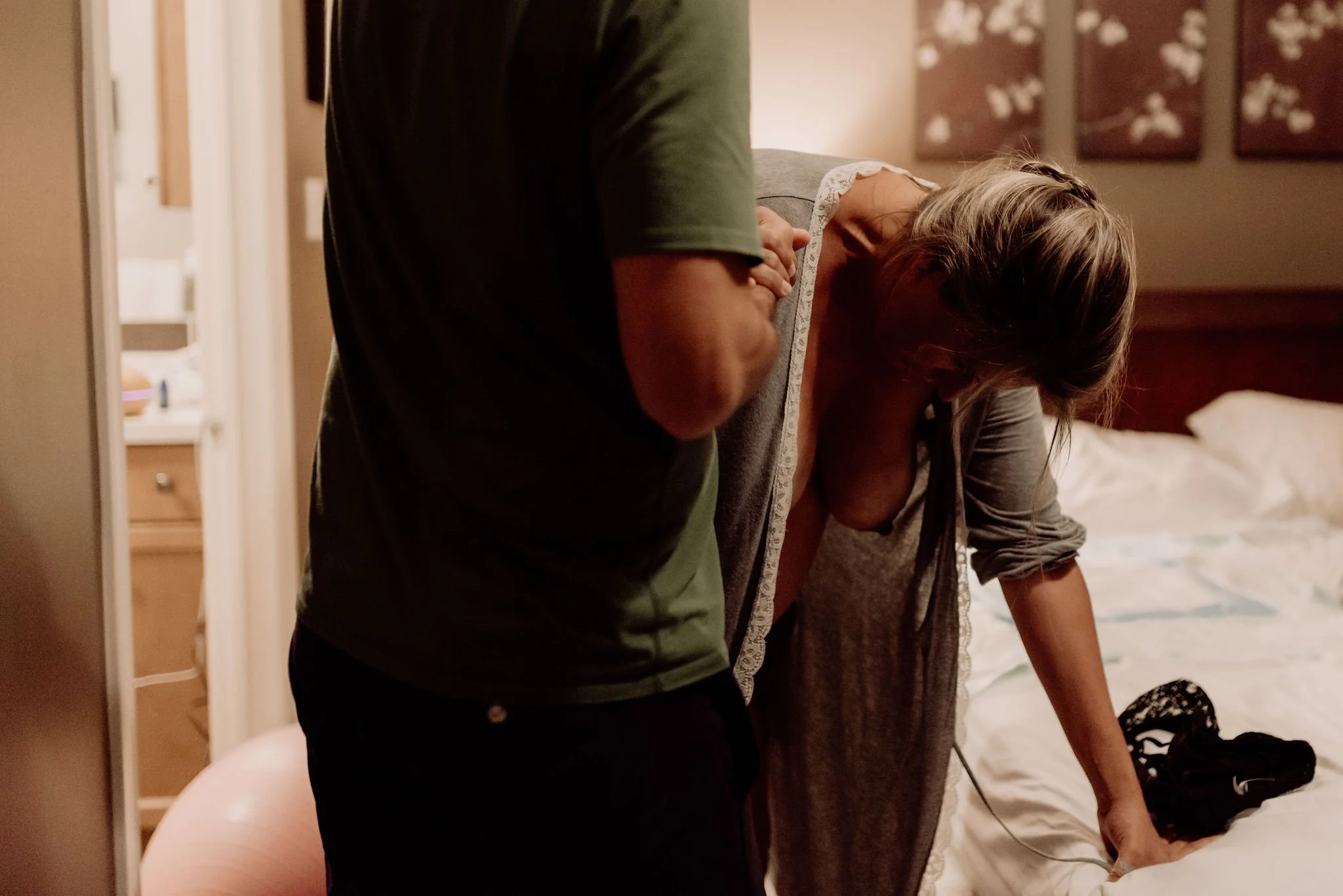
Birth is an active, dynamic process, and your hypnobirthing practice should prepare you for that reality. If you are preparing to be in a deep sleep or a trance throughout your labor and birth, this may not be your experience but that doesn’t mean self-hypnosis didn’t work for you. While some birthing mothers may give birth this way (even if they didn’t take a hypnobirthing class), if you expect hypnosis to look like “being in a trance” for the entire birth, you may understandably wonder if it didn’t work.
We believe your preparation should reflect the reality of birth—not an idealized version of it. Conscious self-hypnosis is designed to help you remain calm, focused, relaxed and connected throughout the many different moments and sensations labor brings.
Birth is beautifully unpredictable.
While physiologic labor contractions are one experience, there are situations that can create genuine pain or additional challenges during labor.
These might include:
Baby’s position
Medical procedures or interventions
Unexpected complications
Exhaustion after a long labor
Injury or trauma
Our goal is never to deny those possibilities but to teach you how to respond to them. One of the greatest benefits of conscious self-hypnosis is that it helps you remain calm, centered, and present—even when labor becomes more complex than expected. Rather than becoming overwhelmed by fear or entering a fight-or-flight response, you learn to stay connected to yourself, your baby, and your decision-making. Calm awareness allows you to ask questions, advocate for your preferences, and make informed decisions, regardless of how your birth unfolds.
Pain and Suffering Are Not the Same
Pain and suffering are often treated as though they are identical. They are not.
Suffering is often amplified by fear, uncertainty, resistance, or the feeling that something is happening to us instead of with us. Self-hypnosis, relaxation techniques, and breath awareness helps interrupt that cycle. These tools create space between the physical sensations you experience and the emotional response that often intensifies them.
If Your Birth Didn’t Go As Planned…
If you’ve taken any kind of hypnobirthing class before and walked away feeling like you failed…We’re truly sorry. You did not fail.
If you needed an epidural—you did not fail. If your homebirth transferred to a hospital setting—you did not fail. If you needed an induction—you did not fail.If your baby was born by cesarean—you did not fail. If fear showed up during labor—you did not fail.
Birth is not a test. And your worth as a mother has never depended on how your baby entered the world. Hypnosis can help us be aware of anxiety or fear without being controlled by it. That is very different from believing fear must never exist.
We Believe in Transparency
We are cautious of any program that promises one technique, one philosophy, or one method as the only path to a positive birth.Birth is deeply personal. Every family is different. Every pregnancy is different. Every birth unfolds differently.
Instead of asking parents to fit into one philosophy, we believe childbirth education should adapt to the unique needs of each family. We’re grateful there are many childbirth education options available today. Our role isn’t to convince you we’re the only answer. Our role is to help you discover whether we’re the right fit for you.
Hypnobirthing Requires Practice
Like learning a musical instrument…training for a marathon…or preparing for an important presentation…hypnosis becomes more natural with consistent practice. The good news? Practice doesn’t have to be perfect. Small, consistent practice often produces the greatest results.
Every family learns differently.
Some people enjoy independent study. Others prefer a classroom. Many appreciate personalized one-on-one guidance. None of these options is inherently “better.” The best childbirth class is the one you’ll actually complete, practice, and integrate into your daily life. As you explore your options, ask yourself:
How do I learn best?
How much accountability do I want?
Would personalized support help me feel more confident?
What fits my schedule?
What fits my budget?
What kind of birth preparation feels most aligned with me?
When your education matches your learning style, you’re far more likely to feel prepared and confident when labor begins.

Our Promise
We won’t promise a perfect birth. We won’t promise that hypnosis can prevent every intervention.
What we do promise is honest education, realness, practical tools, an attainable hypnosis practice, evidence-based tools, compassionate support, and a safe place to prepare for birth without judgment.
Our hope is that you walk away feeling informed, respected, empowered, and equipped with the lifelong skill of conscious self-hypnosis. This evidence-based tool extends far beyond birth, supporting you through postpartum recovery, the transition into parenthood, everyday stress, future pregnancies, and countless moments where calm, confidence, and self-awareness can make all the difference.